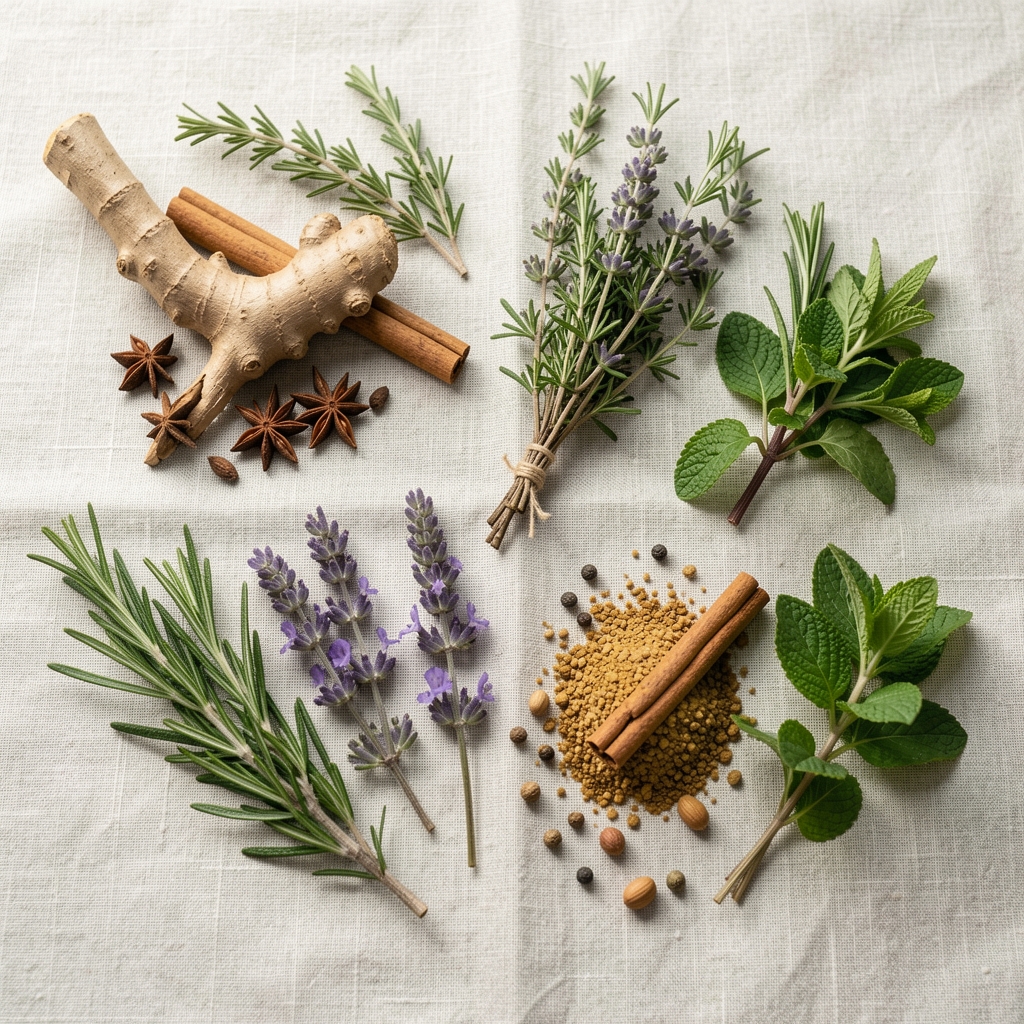
The Malaysian kitchen has always been a repository of accumulated nutritional knowledge. Long before wellness literature formalised terms such as “antioxidant-rich diet” or “zinc-rich foods,” the plants that grew in Malaysian soil — halia, serai, ulam raja, daun pegaga — were woven into everyday cooking with an empirical confidence grounded not in published research but in generational observation. This editorial review examines a selection of those traditional botanical practices as they appear in the daily habits of active men in Malaysia today.
The Kitchen as Accumulated Knowledge
In a conversation with a Kuala Lumpur-based strength coach in his late thirties, the subject of herbs came up not through a discussion of nutrition but through a discussion of cooking. He described how his mother had always added serai to boiling water for rice, and how he had continued the practice without questioning it for twenty years before encountering published research on lemongrass composition. The point he was making was not about the research, but about the knowledge that precedes it — the practical nutritional intelligence embedded in Malaysian food culture that operates at a different timescale than formal wellness literature.
Traditional wellness Malaysia encompasses a wide body of botanical practices rooted in both Malay, Chinese, and Indian cultural traditions. For active men, the relevant intersections tend to cluster around a few key areas: foods associated with daily energy rhythm and recovery awareness, ingredients with documented antioxidant profiles, and plants traditionally associated with digestive ease. The Glanover Notebook editorial approach reviews these intersections through published wellness and nutritional research, presenting associations rather than prescriptions.
Halia: Ginger in the Male Nutrition Archive
Halia — ginger — appears with striking frequency in the everyday dietary practices of active Malaysian men. Whether in the form of halia bakar (a traditional warming preparation), sliced fresh into morning drinks, or incorporated into cooked dishes, ginger's presence in Malaysian cooking is so baseline as to be effectively invisible. Published nutritional research on ginger documents an extensive antioxidant-rich profile associated with everyday wellness routines.
Among the active men interviewed for this editorial, ginger preparation showed considerable variation. Several described weekly batches of fresh ginger water kept in the refrigerator. Others described halia bakar as their primary post-exercise recovery drink — a traditional preparation made by roasting fresh ginger until the outer skin chars, then brewing as a tea. The traditional wellness literature associated with this preparation describes its warming properties and association with muscle recovery awareness, observations that align broadly with published research on ginger's documented nutritional profile.
“My grandfather drank ginger water every day for fifty years. He did not know why. He just knew it was part of what you did. Now there are papers about it. The knowledge was always there.” — Research professional, Shah Alam, 2026
Serai and the Lemongrass Tradition
Serai — lemongrass — is present in Malaysian cooking with a frequency that reflects both culinary and cultural function. As a flavouring agent it is indispensable; as a wellness botanical it holds a documented place in Southeast Asian traditional practice. Published nutritional research on lemongrass notes its documented profile of antioxidant compounds, relevant to an antioxidant-rich diet for active men.
Active men in the Klang Valley described serai most commonly as a cooking ingredient rather than a standalone wellness preparation — an acknowledgement that for most men, nutritional benefit arrives through ordinary cooking rather than through supplement-adjacent practice. The nutritional architecture of a well-constructed Malaysian curry, with its serai, halia, kunyit (turmeric), and daun curry, represents a whole food nutrition model that active men in Malaysia have access to through entirely conventional eating patterns.
Ulam and the Raw Herb Tradition
The ulam tradition — eating raw or lightly blanched herbs and vegetables as an accompaniment to a main meal — represents perhaps the most underappreciated nutritional practice in Malaysian men's everyday eating. Ulam raja, daun pegaga (Asiatic pennywort), petai, and a rotating cast of seasonal greens are consumed alongside rice dishes in a practice that functions as a densely nutritious sideline to an otherwise conventional meal.
For men's nutrition, the ulam tradition is notable for its protein and micronutrient contribution. Petai, for instance, is a rich source of protein relative to its size and contributes meaningfully to zinc-rich food diversity. Daun pegaga, traditionally prepared with grated coconut in a fresh salad called kerabu pegaga, appears extensively in traditional wellness literature associated with cognitive alertness and recovery awareness — associations documented in ethnobotanical research and now attracting renewed interest in published nutritional science.
Kunyit and the Turmeric Narrative
No review of traditional wellness Malaysia would be complete without reference to kunyit — turmeric. The global wellness conversation around turmeric has, in recent years, substantially overclaimed. The editorial approach of Glanover Notebook documents the traditional Malaysian use without amplifying those claims. What the published research supports is more modest and more interesting than the popular narrative: curcumin, the active compound in turmeric, demonstrates antioxidant-rich properties in nutritional studies. In Malaysian traditional practice, turmeric appears in both cooking and cultural wellness routines associated with recovery awareness after physical exertion.
Among the active men interviewed, kunyit appeared most commonly in curries and rice dishes — rarely as a standalone supplement, almost always as part of a whole food context alongside fats that traditional knowledge (and modern nutritional research) associate with improved uptake. The absorption of curcumin is significantly increased by the presence of black pepper and fat — a combination that appears naturally in Malaysian curry preparation through the standard inclusion of pepper and coconut milk. The traditional kitchen, once again, anticipated the research.
Notes on the Everyday Integration
The recurring observation across conversations with active men Malaysia-wide was how rarely these plants were framed as wellness additions. They were simply food. The nutritional benefit arrived through ordinary eating — through the structure of Malaysian cuisine itself — rather than through deliberate supplementation or wellness-programme adoption. This has implications for how men's nutrition is framed in editorial practice.
For active men in Malaysia, the local food environment provides rich nutritional diversity through entirely conventional channels. Herbs and spices for wellness are not exotic additions to an otherwise depleted diet; they are architectural features of a cuisine that evolved, over centuries, to support an active population in a tropical environment. The men who reported the most consistent energy and recovery habits were, with notable frequency, those who ate most conventionally Malaysian — not those who had adopted imported wellness frameworks.
Glanover Notebook documents these observations as editorial reporting on natural approaches for men, informed by published wellness research and grounded in the lived practices of active men across the country. No specific dietary changes are prescribed, and no particular outcomes are associated with any specific preparation. The record is offered as documentation, not direction.